


Recognize that anxiety isn’t something to eliminate but rather a signal to understand, as Dr. K (Dr. Alok Kanojia) teaches through his work at HealthyGamerGG. His approach combines ancient yogic philosophy with modern psychiatry to help you work with your nervous system rather than against it. When panic strikes, he emphasizes that your body is activating its threat response based on perceived danger, not actual danger, and learning this distinction changes everything.
Identify your anxiety’s root cause by asking what your mind is protecting you from. Dr. K explains that anxiety often stems from unprocessed emotions or unmet needs your brain hasn’t resolved. Instead of trying to think your way out of anxious thoughts, he recommends observing them without judgment, a practice rooted in meditation techniques that create distance between you and your racing mind. This observer perspective helps you realize that thoughts are events in your consciousness, not absolute truths you must obey.
Practice what Dr. K calls “sitting with” difficult emotions rather than avoiding them. When anxiety appears, resist the urge to distract yourself immediately. Instead, locate where you feel it in your body, breathe into that space, and allow the sensation to exist without trying to fix it. This counterintuitive approach actually reduces anxiety’s power over time because you’re teaching your nervous system that these feelings aren’t dangerous.
Dr. K’s framework offers hope for those who’ve tried conventional anxiety management without success. His methods acknowledge that anxiety serves a purpose in your life, and by understanding that purpose with compassion rather than judgment, you can begin to heal the underlying patterns driving your distress.
Who Is Dr. K and Why His Anxiety Approach Resonates
Dr. Alok Kanojia, widely known as Dr. K, brings a perspective to anxiety treatment that feels refreshingly different from traditional approaches. A Harvard-trained psychiatrist who also spent time training as a monk in India, Dr. K bridges two worlds that don’t often meet in mental health care. His background allows him to combine the scientific rigor of Western psychiatry with the wisdom of Eastern contemplative practices, creating a framework that resonates with people who may have felt disconnected from conventional therapy.
What makes Dr. K’s approach particularly powerful is his ability to explain complex mental health concepts in everyday language. Through his online platform HealthyGamer, he’s helped thousands of people understand that anxiety isn’t simply something to eliminate or suppress. Instead, he teaches that anxiety serves a purpose and that understanding its roots can transform how we relate to it.
His teaching style stands out for its complete lack of judgment. Dr. K openly shares his own struggles with mental health, creating a space where vulnerability feels safe rather than shameful. He doesn’t talk down to his audience or oversimplify their experiences. Instead, he validates the real difficulty of living with anxiety while offering practical pathways forward.
Many people find relief in Dr. K’s explanation of how the mind works, particularly his insights into the connection between our thoughts, emotions, and physical sensations. He helps viewers recognize patterns they’ve lived with for years but never fully understood. This recognition alone can feel transformative, shifting anxiety from an overwhelming force to something more manageable.
His approach emphasizes that healing doesn’t require perfection. Small shifts in awareness and practice can create meaningful change over time. For those who’ve felt discouraged by previous attempts to manage their anxiety, Dr. K’s compassionate, accessible methods offer renewed hope and a fresh starting point.

Understanding Anxiety Through Dr. K’s Framework
The Mind-Body Connection in Anxiety
Dr. K emphasizes that anxiety isn’t just “all in your head” – it’s a full-body experience involving your thoughts, physical sensations, and emotions working together in powerful cycles. Understanding this connection is essential to managing anxiety effectively.
When you feel anxious, your mind might race with worrying thoughts. Your body responds by activating its stress response: your heart beats faster, your breathing becomes shallow, and your muscles tense. These physical sensations then feed back into your mind, which interprets them as signs of danger, creating more anxious thoughts. This creates a reinforcing loop that can feel impossible to escape.
Dr. K explains that many people misinterpret their body’s signals. For example, when your heart races during anxiety, your mind might jump to catastrophic conclusions like “Something is wrong with me” or “I’m losing control.” This interpretation intensifies the anxiety, triggering even stronger physical responses.
The good news is that you can interrupt this cycle at multiple points. By recognizing that physical sensations are simply your body’s natural stress response – not actual danger – you can begin to shift your relationship with anxiety. Dr. K teaches that when you understand how thoughts influence bodily sensations and vice versa, you gain power over the cycle rather than feeling trapped by it.
This mind-body perspective opens doors to practical interventions. You can work with your breath, challenge thought patterns, or practice grounding techniques to break the anxious loop and restore balance.
Why Your Brain Gets Stuck in Anxiety Loops
Dr. K explains that anxiety often becomes a repeating cycle because of how our brain learns from experience. When you feel anxious, your mind naturally searches for the cause. It asks, “Why do I feel this way?” Your brain then creates an explanation, often linking your anxiety to whatever you’re thinking about at that moment—whether it’s work, relationships, or health concerns.
Here’s where the loop begins: once your brain connects anxiety to a specific thought or situation, it remembers that connection. The next time you encounter something similar, your brain recalls, “Last time this happened, we felt anxious.” This triggers the same anxious response, even when there’s no real danger.
Over time, this pattern becomes automatic. Your brain essentially trains itself to feel anxious in certain situations, creating what Dr. K calls an “anxiety habit.” It’s not that you’re choosing to be anxious—your brain is simply following a learned pattern, like muscle memory.
What makes this particularly challenging is that anxiety itself generates more anxious thoughts. When you’re already feeling worried, your mind becomes hyperalert to potential threats, finding more reasons to stay anxious. This reinforces the loop further, making it feel impossible to break free.
Understanding this process is crucial because it helps you recognize that you’re not broken or weak. Your brain is actually doing what it’s designed to do—protect you by learning from past experiences. The good news is that just as these patterns were learned, they can also be unlearned with the right approach.
Dr. K’s Core Strategies for Managing Anxiety
Observing Without Judgment
When anxiety shows up, our natural instinct is to push it away or fight against it. Dr. K teaches a different approach: simply noticing anxiety without trying to make it disappear. This isn’t about ignoring your feelings or pretending everything is fine. Instead, it’s about creating space to observe what’s happening in your body and mind without immediately reacting.
Think of it like watching clouds pass across the sky. You notice them, you see their shapes and movements, but you don’t try to push them away or hold onto them. When you feel anxiety rising, pause and ask yourself: “What exactly am I experiencing right now?” You might notice your heart beating faster, tightness in your chest, or racing thoughts. Name these sensations without labeling them as good or bad.
A practical exercise to try: Set a timer for two minutes when you feel anxious. During this time, simply observe your physical sensations and thoughts as if you’re a curious scientist. Notice where in your body you feel tension. Pay attention to the speed and content of your thoughts. You’re not trying to change anything, just gathering information.
In daily life, this might look like noticing anxiety before a meeting and thinking, “My chest feels tight and my mind is racing” rather than “I’m freaking out and this is terrible.” This small shift creates distance between you and the anxiety, reminding you that you’re experiencing a feeling, not being controlled by it.
The goal isn’t to eliminate anxiety through observation. Rather, observing without judgment helps you respond more skillfully instead of reacting automatically from fear.
Working With Physical Sensations
When anxiety strikes, your body often responds before your mind fully processes what’s happening. You might notice your heart racing, chest tightening, hands trembling, or shallow breathing. Dr. K emphasizes that these physical symptoms aren’t something to fight against, but rather signals to acknowledge and work with.
One of Dr. K’s core teachings involves recognizing that physical sensations are your nervous system’s way of responding to perceived threat. Instead of trying to suppress these feelings, he encourages what he calls “riding the wave” of sensation. This means observing the physical experience without judgment or panic about the panic itself.
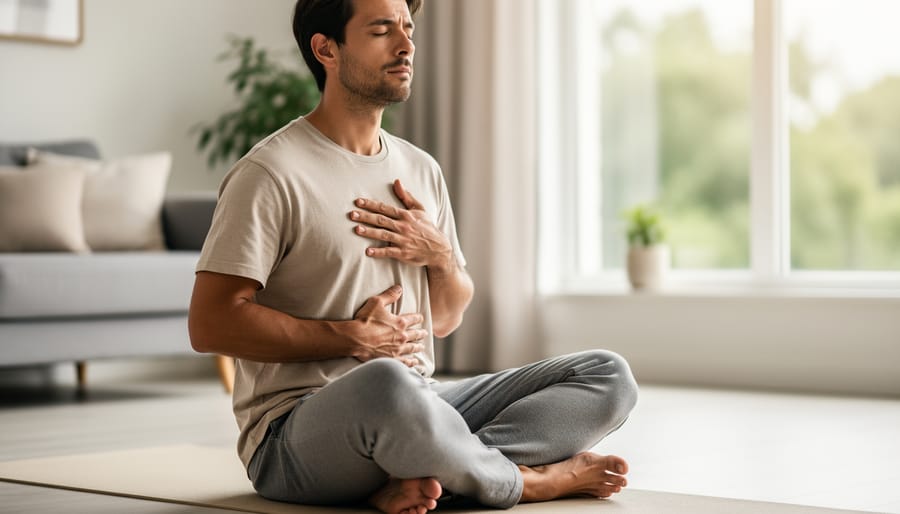
Breathing practices form a central part of managing these symptoms. Dr. K often recommends diaphragmatic breathing, where you breathe deeply into your belly rather than shallow chest breathing. Try placing one hand on your chest and one on your stomach. As you breathe in slowly through your nose, feel your belly rise while your chest stays relatively still. Exhale slowly through your mouth. This activates your body’s natural calming response.
Body awareness exercises help you stay grounded during anxious moments. Dr. K suggests doing a simple body scan: starting from your toes, notice sensations in each part of your body as you move upward. This practice helps shift attention away from anxious thoughts and reconnects you with the present moment. Even noticing where your body makes contact with your chair or feeling your feet on the ground can interrupt the anxiety cycle and bring you back to safety.
Breaking the Avoidance Cycle
One of the most important insights Dr. K shares about anxiety is understanding the avoidance cycle. When we feel anxious, our natural instinct is to avoid whatever triggers that uncomfortable feeling. While avoidance provides immediate relief, it actually strengthens anxiety over time. Each time we avoid something, our brain learns that the situation truly was dangerous, making us even more likely to avoid it in the future.
This creates a cycle: anxiety leads to avoidance, which temporarily reduces discomfort but ultimately reinforces the fear. Over weeks and months, the things we avoid can grow from one specific situation to broader categories of experiences, gradually shrinking our lives.
Breaking this cycle requires gradually facing fears with self-compassion. Dr. K emphasizes that this doesn’t mean forcing yourself into overwhelming situations. Instead, start small. If social situations trigger anxiety, you might begin by texting a friend rather than immediately attending a large gathering. The key is taking manageable steps that challenge avoidance without flooding your system.
When facing fears, acknowledge the discomfort without judgment. You might say to yourself, “This feels scary, and that’s okay. I’m building courage right now.” Notice that anxiety naturally rises and falls when you stay present rather than escape. Each time you face a fear, even in a small way, you provide your brain with evidence that you can handle difficulty.
Remember that setbacks are normal. Some days you’ll manage more than others, and that’s part of the process. What matters is the overall direction of gradually expanding what feels possible.
When Panic Strikes: Dr. K’s In-the-Moment Tools
When panic strikes, your body floods with adrenaline, your heart races, and you might feel like you’re losing control. Dr. K emphasizes that understanding what’s happening in these moments is the first step to managing them. Your body has activated its alarm system, but you’re not in actual danger. Here are practical tools you can use right when anxiety peaks.
Start with what Dr. K calls “riding the wave.” Panic attacks typically last between 5 to 20 minutes and follow a predictable pattern: they build, peak, and then naturally subside. Instead of fighting the sensations, acknowledge them. Say to yourself, “This is uncomfortable, but it will pass. My body is just responding to perceived danger.” This simple reframe can prevent you from adding layers of fear on top of the physical symptoms.
The 5-4-3-2-1 grounding technique offers immediate relief. Look around and name five things you can see, four you can touch, three you can hear, two you can smell, and one you can taste. This exercise pulls your attention away from internal panic and anchors you in the present moment. Your racing thoughts need somewhere concrete to land, and this provides that target.
Dr. K also recommends controlled breathing, but with an important twist. Don’t force deep breaths when you’re hyperventilating. Instead, breathe in for four counts, hold for four, out for six. The longer exhale activates your parasympathetic nervous system, which naturally calms your body. Place one hand on your chest and one on your belly to ensure you’re breathing from your diaphragm.
During recovery, be patient with yourself. Many people worry when anxiety returns after they’ve had a good day. Dr. K reminds us that healing isn’t linear. You might experience setbacks, and that’s completely normal. Each time you use these tools, you’re building resilience. Your brain is learning that these sensations, while uncomfortable, aren’t dangerous.
Keep a small card with these steps in your wallet or save them in your phone. When panic hits, accessing your rational mind becomes difficult. Having these tools written down gives you something tangible to follow when you need it most.
Building Long-Term Resilience Against Anxiety
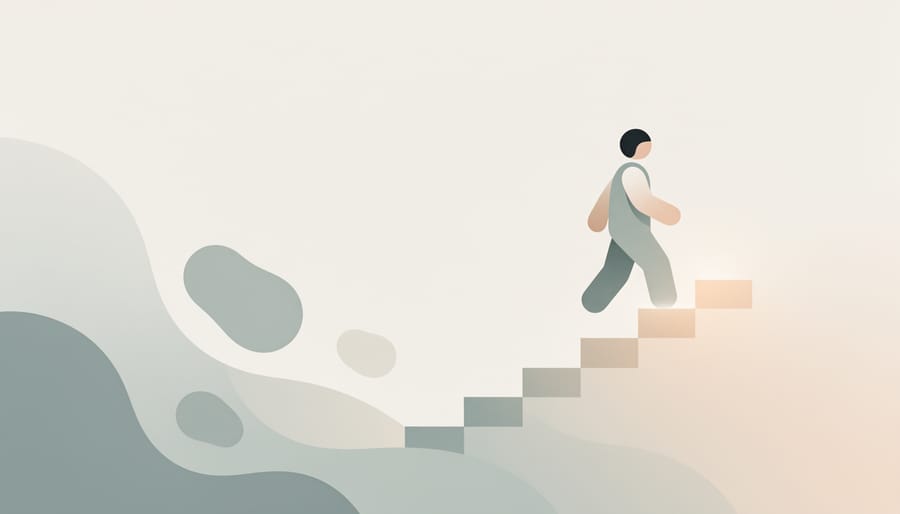
Dr. K emphasizes that managing anxiety isn’t about finding a quick fix, but rather building lasting resilience through consistent, sustainable practices. His approach focuses on creating a solid foundation that helps you navigate anxiety over the long term, rather than simply responding to crisis moments.
One of Dr. K’s core teachings centers on understanding anxiety as information rather than something to eliminate completely. This perspective shift allows you to work with your anxiety instead of against it. By recognizing what triggers your anxious responses, you can develop personalized strategies that address the root causes rather than just the symptoms.
Lifestyle factors play a crucial role in Dr. K’s framework for long-term resilience. He regularly discusses how sleep quality, nutrition, and physical activity directly impact your nervous system’s ability to regulate stress. Small, consistent changes in these areas can create significant improvements in your baseline anxiety levels over time. He encourages starting with one manageable adjustment rather than overhauling your entire life at once.
Mindfulness practices form another cornerstone of sustainable anxiety management in Dr. K’s teachings. He often draws from both his psychiatric training and his background in Eastern philosophy to offer accessible meditation techniques. These practices help you develop awareness of your thoughts and bodily sensations without judgment, creating space between you and your anxious thoughts.
Dr. K also emphasizes the importance of emotional regulation skills that you can strengthen over time, much like building muscle. This includes learning to sit with uncomfortable feelings rather than immediately trying to push them away, recognizing thought patterns that fuel anxiety, and developing self-compassion when you struggle.
Building resilience is a gradual process that requires patience and self-kindness. Dr. K reminds his audience that setbacks are normal and don’t erase your progress. The goal isn’t perfection but rather developing tools and understanding that support you through life’s challenges, creating a more stable foundation for mental wellbeing.
Real Stories: How People Have Applied Dr. K’s Methods
People from all walks of life have found relief through Dr. K’s anxiety management approaches. Here are some real examples of how his methods have made a difference.
Sarah, a college student, struggled with panic attacks during exams. After learning about Dr. K’s grounding techniques, she started practicing the 5-4-3-2-1 sensory method. By focusing on what she could see, touch, hear, smell, and taste during moments of rising panic, she found she could prevent full-blown attacks. Within weeks, her exam anxiety became manageable, and her grades improved.
Marcus, a software developer, experienced constant worry about work performance. He applied Dr. K’s approach of understanding the root cause of his anxiety rather than just managing symptoms. Through self-reflection, he realized his anxiety stemmed from childhood experiences of never feeling good enough. This awareness helped him separate past wounds from present reality, reducing his daily stress significantly.
Jennifer discovered Dr. K’s content while dealing with social anxiety. She implemented his suggestion of gradually facing feared situations while practicing self-compassion. Instead of avoiding social gatherings entirely, she started with brief coffee meetings with one friend. Each small success built her confidence, and within months, she attended her first group dinner in years.
David used Dr. K’s meditation and breathwork techniques to manage generalized anxiety. Starting with just five minutes daily, he noticed his racing thoughts slowed down. The practice gave him a sense of control he hadn’t felt in years.
These stories show that Dr. K’s methods work differently for everyone, but the common thread is taking small, consistent steps toward understanding and managing anxiety.
What to Do When You Need More Support
While Dr. K’s techniques offer valuable tools for managing anxiety, there are times when self-help strategies alone may not be enough. Recognizing this isn’t a failure—it’s an important step in your healing journey.
Consider seeking professional support if you notice anxiety consistently interfering with your daily life, relationships, or work. If you’re experiencing panic attacks that feel unmanageable, avoiding important activities, or noticing symptoms worsening despite using self-help techniques, these are signs that additional help could benefit you.
Professional support might include working with a therapist who specializes in anxiety disorders, consulting with a psychiatrist about medication options, or exploring intensive treatment programs. Many people find that combining Dr. K’s insights with professional therapy creates a powerful foundation for recovery.
Starting the search for help can feel overwhelming. Begin by reaching out to your primary care doctor, who can provide referrals. Many therapists now offer online sessions, making access easier. If cost is a concern, community mental health centers often provide services on a sliding scale.
Remember that Dr. K himself is a trained psychiatrist who often emphasizes the importance of professional support when needed. Seeking help demonstrates self-awareness and courage. You deserve comprehensive care that addresses your unique needs, whether that includes therapy, medication, support groups, or a combination of approaches. Taking this step forward shows strength and commitment to your wellbeing.

Managing anxiety isn’t about reaching a finish line where you’ll never feel anxious again. It’s an ongoing journey of learning what works for you, practicing new skills, and showing yourself compassion along the way. The techniques Dr. K shares remind us that our brains are capable of change, and with patience and practice, we can reshape how we respond to anxious thoughts and feelings.
If you’re feeling overwhelmed right now, that’s okay. You don’t need to master everything at once. Start small. Maybe today you simply notice your anxiety without judgment, or perhaps you try one minute of breathing exercises. These tiny steps matter more than you might think. Each time you engage with your anxiety differently, you’re building new pathways in your brain.
Remember that setbacks are part of the process, not signs of failure. Some days will feel harder than others, and that’s completely normal. Be as kind to yourself as you would be to a friend going through the same struggle.
Consider choosing just one technique from Dr. K’s approach that resonates with you and commit to trying it this week. You deserve support, and taking even the smallest action toward managing your anxiety is something to celebrate.