


The cycle of anxiety is a self-reinforcing pattern where worry triggers physical symptoms, those symptoms fuel more anxious thoughts, and those thoughts create behaviors that temporarily relieve distress but ultimately strengthen the pattern. Unlike a single anxious episode that fades on its own, this cycle feeds itself, growing stronger each time you move through it.
If you’ve ever noticed that trying harder to control your anxiety seems to make it worse, or that relief from one worry is quickly replaced by another, you’re experiencing this cycle firsthand. Recent data shows that Canadians are reporting their highest levels of anxiety to date at 25%, covering both self-reported and diagnosed anxiety. Many of these individuals aren’t just feeling anxious occasionally; they’re caught in a loop that feels impossible to escape.
The good news is that understanding how this cycle works gives you specific points where you can intervene. You don’t need to eliminate anxiety completely to break free. You need to recognize the pattern, identify where you’re most vulnerable within it, and apply targeted strategies that interrupt the loop before it gains momentum.
This article breaks down each component of the anxiety cycle so you can spot it in your own life. You’ll learn why certain coping strategies backfire, which evidence-based techniques actually disrupt the pattern, and when it’s time to seek professional support. The cycle feels automatic now, but it’s built from learned responses, and what’s been learned can be changed.
What Cycle Anxiety Means
Cycle anxiety describes the experience of anxiety that feeds on itself, creating a loop where worry about feeling anxious becomes as troubling as the original anxiety trigger. Unlike a single episode that rises and then subsides, cycle anxiety traps people in a pattern where each anxious thought or sensation sparks new worry, which intensifies the physical and emotional response, which then fuels more anxious thoughts. The cycle gains momentum over time, making it harder to distinguish where one wave of anxiety ends and the next begins.
What makes cycle anxiety particularly challenging is that it’s self-perpetuating. When you feel your heart race or your mind spiral, you might think “I can’t handle this” or “What if this never stops?” These thoughts about the anxiety itself become new triggers, launching another round of physical symptoms and worried thinking. The original source of worry often fades into the background while the anxiety about experiencing anxiety takes center stage.
- Cycle anxiety
- A pattern where anxiety feeds on itself in a continuous loop, with worry about feeling anxious becoming the main source of distress rather than any external trigger.
- Self-perpetuating anxiety
- Anxiety that maintains itself through a feedback loop where symptoms trigger worry, which creates more symptoms, independent of whether the original stressor remains present.
- Anticipatory anxiety
- Worry about future anxiety episodes that can activate the same physical and emotional responses as if the feared situation were happening now.
- Anxiety spiral
- The escalating pattern where anxious thoughts intensify physical symptoms, which strengthen emotional reactions, which generate more catastrophic thoughts in rapid succession.
This differs fundamentally from situational anxiety, where stress naturally decreases once a specific challenge passes. In cycle anxiety, the threat feels continuous because the mind and body have learned to react to their own signals. With 25% of Canadians reporting anxiety at the highest levels to date, many people find themselves caught in this loop without recognizing it as a distinct pattern that requires specific strategies to interrupt.
How the Cycle of Anxiety Works

The Trigger Phase
The trigger phase begins when something, a thought, sensation, situation, or memory, activates your body’s threat detection system. These triggers can be external, like an upcoming presentation or a crowded space, or internal, like noticing your heart rate increase or remembering a past anxious experience. What makes triggers powerful isn’t necessarily their objective severity, but how your brain interprets them as potential threats.
Once activated, your nervous system releases stress hormones that prepare you for danger, creating the physical sensations we recognize as anxiety. This reaction happens quickly, often before conscious awareness. A trigger that seemed manageable yesterday might feel overwhelming today because your system has learned to associate similar cues with threat. The anxiety response itself can become a trigger: noticing familiar physical symptoms might instantly activate worry about having another anxiety episode, setting the cycle in motion before the original trigger is even resolved.
The Reinforcement Loop
When anxiety strikes, the instinct to avoid what triggers it feels protective. Leaving a crowded room, canceling plans, or checking your phone repeatedly for reassurance might calm you in the moment. But this temporary relief comes at a cost: each time you avoid or seek safety, you send your brain a message that the threat was real and that you needed protection. Research confirms that avoidance maintains anxiety by preventing you from learning that the feared outcome is unlikely or manageable.
The cycle tightens because your brain now associates relief with avoidance, making it harder to face similar situations next time. What started as a reasonable response becomes a pattern: more situations feel threatening, more behaviors feel necessary, and the window of what feels safe shrinks. You’re not weak for avoiding, you’re responding to a powerful feedback loop that rewards short-term comfort while building long-term anxiety.
Components of Cycle Anxiety
Thought Patterns That Fuel the Cycle
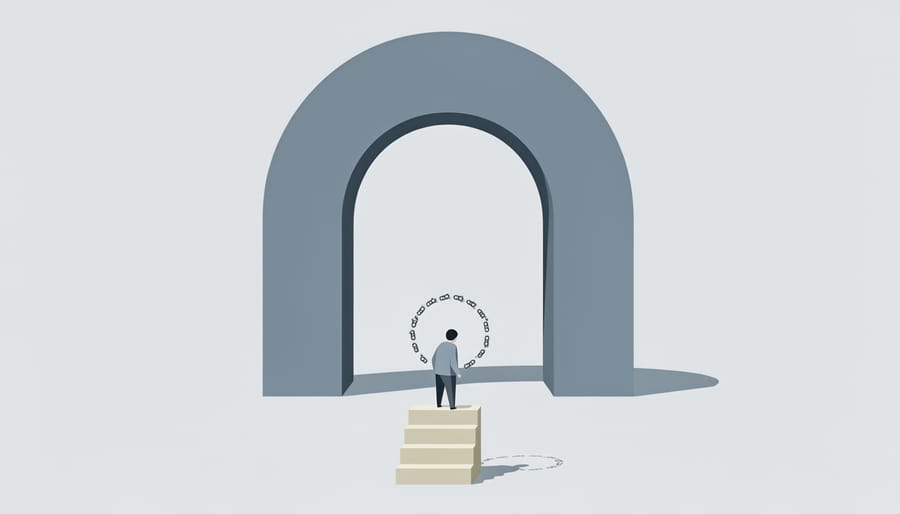
Certain thinking patterns intensify cycle anxiety by making threats feel more immediate and overwhelming than they actually are. Catastrophizing transforms minor worries into disaster scenarios, a delayed text becomes evidence of relationship collapse, or a work mistake signals inevitable job loss. This pattern fuels the cycle by creating disproportionate physical and emotional responses that feel validating, convincing you the catastrophe is real.
All-or-nothing thinking eliminates middle ground, framing situations as complete success or total failure. When you view a single anxious moment as proof you’re “falling apart” or one difficult day as a “relapse,” you amplify distress and reinforce the belief that anxiety is uncontrollable. This rigid thinking style maintains the cycle by preventing you from recognizing partial progress or normal fluctuations.
Overestimation of threat makes neutral situations feel dangerous. Your brain calculates risk inaccurately, treating social interactions, physical sensations, or uncertainty as genuine emergencies. When combined with anxiety and panic this pattern creates a feedback loop where misinterpreted body signals trigger more intense worry, which produces more physical symptoms to misinterpret.
Mind reading compounds these distortions by assuming you know what others think, always negatively. Fortune telling predicts failure before events occur. Together, these thought patterns create a self-fulfilling prophecy that keeps cycle anxiety spinning.
Physical and Emotional Signals

The body’s stress response is both a contributor to cycle anxiety and a casualty of it. When anxiety triggers your fight-or-flight system, you experience a cascade of physical changes: rapid heartbeat, shallow breathing, muscle tension, sweating, dizziness, or nausea. These sensations aren’t just uncomfortable, they often become anxiety triggers themselves. A racing heart might spark worry that something is wrong physically, which intensifies the anxiety, which accelerates the heart rate further.
This is why cycle anxiety can feel so physical. Your body is responding to a perceived threat, but when that threat is anxiety itself, the physical symptoms reinforce the very state they’re meant to protect you from. Someone who has experienced panic attacks, for instance, might become hypervigilant to any subtle increase in heart rate, interpreting it as the start of another attack. This vigilance creates tension and arousal that can actually trigger the feared response.
Emotional signals work similarly. Feeling anxious about feeling anxious creates a meta-level of distress that amplifies the original emotion. The frustration, shame, or fear you experience in response to anxiety symptoms becomes part of the fuel that keeps the cycle running.
Why Anxiety Becomes a Cycle
Anxiety becomes a cycle because your brain is doing exactly what it evolved to do: protect you from danger. The amygdala, your brain’s threat detection system, flags potential risks and triggers your fight-or-flight response. When you experience anxiety and then avoid the situation or feeling, your brain files that experience as evidence that the threat was real. Next time a similar situation arises, your amygdala responds even faster and more intensively, treating the anxiety itself as proof of danger.
This pattern strengthens through learned associations. If you feel anxious in a crowded space and leave, you feel immediate relief. Your brain registers that leaving equals safety, which reinforces the cycle. The temporary reduction in discomfort acts as a powerful reward, making avoidance your go-to response. Over time, the situations that trigger anxiety can expand. What started as discomfort in large crowds might extend to smaller gatherings, elevators, or even leaving your home. Understanding the distinction between agoraphobia vs social anxiety can help you recognize how this pattern manifests differently for different people.
The neurological piece matters too. Repeated activation of the stress response strengthens those neural pathways, making the anxiety cycle your brain’s default route. The more you travel that path, the more automatic it becomes. But just as these patterns were learned, they can be unlearned. Efforts to maintain mental health can help build new neural pathways that challenge the cycle.
Recognizing that cycle anxiety reflects normal brain function, not personal failure, changes how you approach it. You’re not broken. Your threat detection system is simply working overtime, and with the right strategies, you can teach it to recalibrate.
Recognizing Cycle Anxiety in Your Life
Cycle anxiety doesn’t announce itself with a clear beginning. It emerges gradually, often hidden in small shifts you might dismiss as temporary stress or a rough patch. Recognizing that your anxiety has become cyclical requires honest self-observation and attention to patterns that build over time.
The most telling sign is progressive avoidance. Situations you once handled with mild discomfort now feel impossible. Your comfort zone shrinks week by week. You cancel plans more often, delegate tasks to avoid specific triggers, or create elaborate workarounds to bypass anxiety-provoking situations entirely. This narrowing of your life is the cycle’s most visible footprint.
Watch for these warning signs that anxiety has become self-perpetuating:
- Avoiding situations you previously managed with minimal discomfort
- Spending hours each day worrying about worrying or analyzing your anxiety
- Physical symptoms like racing heart or nausea appearing more frequently
- A steadily shrinking comfort zone in work, social, or personal contexts
- Difficulty concentrating because anxious thoughts intrude constantly
The mental markers are equally important. You think about anxiety when you’re not actually anxious, rehearsing worst-case scenarios or checking whether you feel nervous. Worry becomes a background hum rather than an occasional visitor. You develop anxiety about experiencing anxiety, creating the meta-worry that defines the cycle.
Given that 6% of Canadians now report multiple negative mental health indicators, understanding these patterns matters. Breaking anxiety’s grip starts with recognizing when temporary stress has transformed into a self-reinforcing loop that needs intervention.
Breaking the Cycle of Anxiety
Interrupting Anxious Thoughts
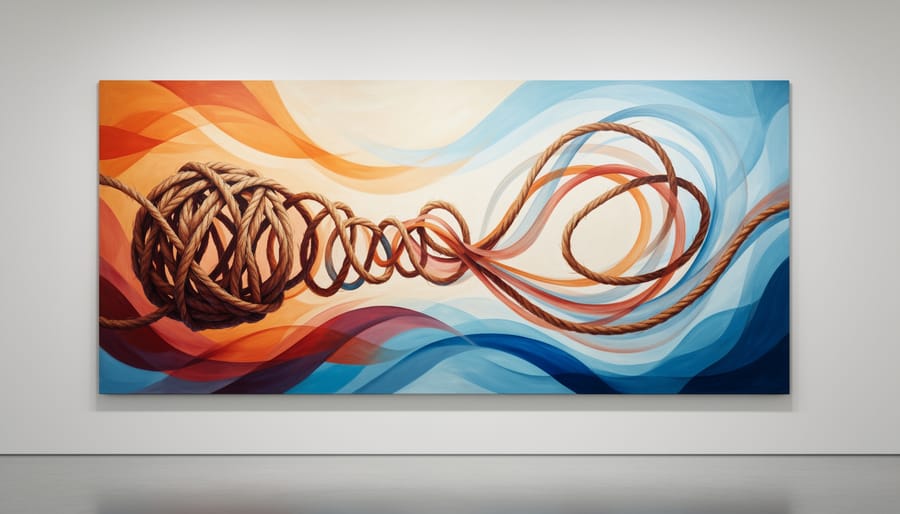
Challenging anxious thoughts requires practice, but it’s one of the most effective ways to weaken the cycle. Start by noticing when catastrophic thinking appears, thoughts like “This will never get better” or “Something terrible is going to happen.” Write down these thoughts exactly as they occur, which creates distance between you and the worry.
Next, examine the evidence. Ask yourself: What actual proof do I have? What would I tell a friend thinking this way? Often, anxious thoughts present worst-case scenarios as certainties when they’re actually possibilities among many outcomes. Look for thinking traps like all-or-nothing reasoning (“I always mess up”) or fortune-telling (“I know this will go wrong”).
Then practice reframing. Instead of eliminating the thought, develop a more balanced perspective. “This feels overwhelming right now, but I’ve managed difficult feelings before” acknowledges the discomfort without catastrophizing. This isn’t positive thinking, it’s accurate thinking.
Cognitive defusion techniques help you stop worrying from controlling your behavior. Try labeling thoughts as “just thoughts” rather than facts, or imagine them as clouds passing across the sky. The goal isn’t to eliminate anxious thoughts but to reduce their power over your actions.
Changing Behavioral Responses
Changing behavioral responses means doing the opposite of what anxiety demands. When you avoid a situation because it triggers anxiety, you teach your brain that the situation is genuinely dangerous. This strengthens the cycle. Gradual exposure, facing feared situations in small, manageable steps, shows your brain that the threat isn’t real and that you can tolerate the discomfort.
Start with situations that cause mild anxiety rather than jumping to what scares you most. If social gatherings trigger your cycle, you might begin by saying hello to a neighbor, then progress to a brief coffee meetup, and eventually attend a larger event. Each successful experience without catastrophic outcome weakens the association between the situation and danger.
Equally important is reducing safety behaviors, the subtle actions you take to feel safer but that actually maintain the cycle. These might include constantly checking your phone during conversations, always sitting near exits, or rehearsing what you’ll say. While these behaviors provide momentary relief, they prevent you from learning that you’re safe without them.
Progress isn’t linear. Some days you’ll manage more than others, and setbacks are normal. The key is consistency over perfection, gradually expanding what you can face until the cycle loses its grip.
When to Seek Professional Support
Recognizing when you need support isn’t always straightforward, especially when cycle anxiety has become familiar background noise. If the cycle is limiting your daily activities, skipping social events, struggling to work, avoiding situations you used to manage, it’s time to reach out. Similarly, when anxiety thoughts consume hours of your day or when sleep, relationships, or physical health are deteriorating, professional support can make a significant difference.
The severity of physical symptoms matters too. If you’re experiencing frequent panic attacks, persistent chest pain or dizziness, or difficulty eating, a mental health professional can help you interrupt the cycle before it becomes more entrenched. Many people wait until they’re completely overwhelmed, but early intervention is far more effective.
Given that 6% of Canadians have multiple negative mental health indicators, you’re not alone in struggling. Yet barriers remain. Stigma still prevents many from seeking help, despite the fact that addressing cycle anxiety is no different from treating any other health condition. Access challenges, long wait times, cost concerns, limited availability in certain areas, create real obstacles, but options exist. Family doctors can provide referrals, community mental health centers often offer sliding-scale fees, and some workplaces include employee assistance programs with free counseling sessions.
Remember that seeking help demonstrates self-awareness and courage, not weakness. A therapist trained in cognitive behavioral therapy or exposure-based approaches can teach you concrete techniques for breaking the cycle that are difficult to implement alone. They provide accountability, adjust strategies when something isn’t working, and help you see patterns you might miss on your own. If you’ve been trying to manage cycle anxiety solo for months without improvement, that’s your signal that support could accelerate your progress.
How Cycle Anxiety Is Used
Understanding the cycle of anxiety isn’t just an academic exercise. Mental health professionals, researchers, and individuals use this framework as a practical tool for identifying patterns, guiding treatment approaches, and developing self-awareness skills that lead to real change.
Therapists apply the Cycle of Anxiety model in clinical settings to help clients map their specific anxiety patterns. By walking someone through the trigger, thought, physical response, and behavior sequence unique to their experience, practitioners can pinpoint exactly where to intervene. This targeted approach makes treatment more efficient than generic anxiety management strategies.
The framework also serves as a self-assessment tool. Many people use it to journal about their anxiety episodes, tracking which stage they get stuck in most often. Someone who notices their cycle always involves physical symptoms might focus on body-based techniques, while another person whose cycle centers on catastrophic thoughts would benefit more from cognitive strategies.
In anxiety education programs and support groups across Canada, where 25% of people report experiencing anxiety, the cycle provides shared language. Participants can describe their experiences using a common structure, making it easier to recognize patterns, share coping strategies, and feel less isolated in their struggles.
Common Questions About Cycle Anxiety
Can cycle anxiety go away on its own?
While some people experience temporary cycles that ease without intervention, sustained cycle anxiety typically requires deliberate effort to interrupt. The patterns become more entrenched over time, making early intervention valuable.
How is cycle anxiety different from an anxiety disorder?
Cycle anxiety describes a self-perpetuating pattern that anyone can experience, while an anxiety disorder is a clinical diagnosis with specific criteria including severity, duration, and functional impairment. Many anxiety disorders involve cyclical patterns, but not all cycle anxiety meets the threshold for a disorder.
What should I do when I’m in the middle of the cycle?
Ground yourself in the present moment using sensory techniques like naming five things you can see, four you can touch, three you can hear, two you can smell, and one you can taste. This interrupts the thought spiral and brings you back to what’s actually happening right now rather than feared possibilities.
How do stigma and access barriers affect getting help for cycle anxiety?
Despite 25% of Canadians reporting anxiety, stigma still prevents many from seeking support, and accessing professional help can involve long wait times, cost barriers, or limited availability in certain regions. Recognizing these as systemic challenges rather than personal failures can help you persist in finding the support you deserve.
Many people wonder whether they need medication to break the cycle of anxiety. The answer depends on the severity and impact of your symptoms. For some, therapy techniques alone provide effective tools for interrupting the pattern. Others find that medication helps reduce the intensity of physical symptoms enough to practice new coping strategies. A mental health professional can help you weigh the options based on your specific situation and preferences.
The timeline for breaking cycle anxiety varies considerably from person to person. Some notice shifts within weeks of consistently applying new responses, while others need months of practice before the pattern loosens its grip. Progress rarely follows a straight line. You might experience improvements, then setbacks, then more improvements. This variability is normal and doesn’t mean the strategies aren’t working. The key is persistence rather than perfection, and celebrating small victories along the way.
The pattern of cycle anxiety affects millions of Canadians, you’re not alone in this experience, and you haven’t done anything wrong. Understanding how the cycle works is the first step toward changing your relationship with anxiety. Small, consistent actions matter more than dramatic transformations. Each time you notice an anxious thought without automatically believing it, or stay present in a situation you’d normally avoid, you weaken the cycle’s grip.
Breaking free doesn’t mean eliminating anxiety entirely. It means learning to respond differently when it shows up, recognizing the pattern before it takes hold, and treating yourself with the same compassion you’d offer a friend. Some days will feel harder than others, and that’s expected. Progress isn’t linear.
You don’t have to figure this out alone. Whether you start with one grounding technique, reach out to a trusted person, or connect with a mental health professional, taking any step forward is meaningful. The cycle became established gradually, and it will take time and practice to interrupt, but it can be interrupted. Your awareness and willingness to understand this pattern already demonstrate strength. Support is available when you’re ready.