


If you’re trying to figure out whether you’re struggling with agoraphobia or social anxiety disorder, the key difference lies in what you’re actually afraid of: agoraphobia centers on the fear of being trapped or unable to escape during a panic attack, while social anxiety disorder focuses on the fear of judgment, embarrassment, or humiliation in social situations. Both conditions can keep you from leaving home and both involve intense anxiety, which is why they’re so easily confused, but understanding which one describes your experience matters because the triggers, thought patterns, and most effective treatment approaches differ significantly.
You’re not alone in this confusion. Many people experience overlapping symptoms, like avoiding crowds or staying home, that could point to either condition. Some people even meet the criteria for both. But if you find yourself declining a dinner invitation because you’re terrified of saying something foolish or being negatively evaluated, that’s social anxiety. If you’re avoiding the same dinner because you’re afraid of having a panic attack at the restaurant with no clear way to leave or get help, that’s more likely agoraphobia.
Getting this right isn’t about labeling yourself. It’s about understanding what’s happening so you can find relief that actually works. The treatment strategies that help someone with social anxiety face their fear of judgment look different from the approaches that help someone with agoraphobia build confidence in managing panic symptoms in various settings.
This article walks you through the specific differences between these two conditions, what each one actually feels like from the inside, and how to recognize which pattern matches your experience.
Agoraphobia and Social Anxiety at a Glance
When you’re trying to understand whether you’re dealing with agoraphobia or social anxiety disorder, seeing the differences laid out side-by-side can bring immediate clarity. These conditions share some surface similarities, both involve anxiety and avoidance, but the underlying fears and trigger patterns are distinctly different.
| Characteristic | Agoraphobia | Social Anxiety Disorder |
|---|---|---|
| Primary Fear | Being trapped, unable to escape, or helpless if panic symptoms occur | Being judged, embarrassed, or humiliated by others |
| Common Triggers | Public transportation, crowds, open spaces, enclosed spaces, being far from home | Speaking in public, meeting new people, eating in front of others, being the center of attention |
| Avoidance Patterns | Avoiding physical locations and situations based on escape difficulty | Avoiding social interactions and situations involving evaluation or scrutiny |
| Physical Symptoms | Intense panic symptoms (racing heart, dizziness, feeling faint); fear of the symptoms themselves | Blushing, trembling, sweating, shaky voice; fear that others will notice these signs |
| Treatment Approaches | CBT focused on panic management, gradual exposure to feared locations, sometimes medication | CBT focused on challenging thoughts about judgment, social skills practice, exposure to social situations |
The most critical distinction lies in what drives the fear. If you’re primarily worried about having a panic attack or being unable to get help in a specific place, you’re likely dealing with agoraphobia. If your anxiety centers on what people think of you and how you’re being perceived in social moments, social anxiety disorder is the more likely match. Both conditions respond well to treatment, but recognizing which pattern fits your experience helps point you toward the most effective path forward.
Understanding Each Condition
What Agoraphobia Is

Agoraphobia is an anxiety disorder in which a person fears being in places or situations where escape is difficult or where help might not be available if something goes wrong. The name comes from Greek words meaning “fear of the marketplace,” but it extends far beyond open spaces. Many people picture someone unable to leave their house, and while that can happen in severe cases, agoraphobia actually involves a specific pattern of fear: you’re terrified that you’ll experience overwhelming panic symptoms, lose control, or feel trapped with no way to get to safety.
What makes agoraphobia particularly misunderstood is that the fear isn’t really about the places themselves. It’s about what might happen to you in those places. You might be perfectly comfortable at home but feel intense dread at the thought of riding a bus, standing in line at the grocery store, sitting in a movie theater, or walking across a parking lot alone. The worry centers on “What if I have a panic attack and can’t escape?” or “What if I need help and no one can reach me?”
- Panic Attack
- A sudden surge of intense fear with physical symptoms like racing heart, chest tightness, dizziness, or feeling detached from reality. In agoraphobia, the fear of having one of these episodes in certain situations drives avoidance.
- Safety Behaviors
- Actions taken to feel more secure, such as always carrying a phone, sitting near exits, or only going places with a trusted companion. These provide temporary relief but reinforce the fear long-term.
- Avoidance
- The pattern of staying away from or enduring with extreme distress situations that trigger fear. This can start small and gradually shrink someone’s world.
- Feared Situations
- Common triggers include public transportation, crowds, enclosed spaces like elevators, wide-open areas like bridges or parking lots, and being outside the home alone. The thread connecting them is feeling unable to leave quickly.
- Panic Disorder with Agoraphobia
- When recurrent panic attacks and agoraphobic avoidance occur together, though someone can develop agoraphobia without having full panic disorder.
Agoraphobia frequently develops after panic attacks. You have one terrifying episode on a subway or in a crowded store, and afterward you start avoiding that place. Then the avoidance spreads to similar situations. Over time, the connection between anxiety and panic creates a cycle: fear of panic leads to avoidance, which prevents you from learning that the feared outcome rarely happens, which keeps the fear alive.
The impact on daily life can be profound. Simple errands become ordeals. Career opportunities slip away because you can’t attend meetings or travel. Relationships strain when friends don’t understand why you can’t join them or when loved ones become de facto caregivers, accompanying you everywhere. Some people structure their entire existence around a shrinking safe zone, turning down invitations and missing experiences not because they want to, but because the anxiety feels unbearable.
What Social Anxiety Disorder Is

Social anxiety disorder, also called social phobia, is more than feeling nervous before a presentation or butterflies when meeting someone new. It’s an intense, persistent fear of being judged scrutinized, or embarrassed in social situations. This fear is so overwhelming that it can dominate daily decisions and limit what feels possible in life.
The distinction from ordinary shyness matters. Shyness might make you quiet at a party or hesitant to speak up in a meeting, but it doesn’t stop you from going or derail your week with dread beforehand. Social anxiety disorder goes deeper. It creates a conviction that others are watching, evaluating, and finding you lacking, even when there’s no evidence that’s true.
Common feared situations cluster around visibility and evaluation. Speaking in public ranks high, but so does the seemingly simple act of eating in front of others, where the fear centers on trembling hands or messy eating being noticed. Meeting new people triggers intense self-consciousness. Being the center of attention, even for positive reasons like a birthday celebration, can feel unbearable. Making small talk becomes an ordeal of second-guessing every word.
What drives all these fears is the terror of negative evaluation. It’s not the situation itself but the belief that you’ll be exposed as awkward, boring, incompetent, or strange. This fear creates a painful feedback loop: anxiety makes you blush or stumble over words, which you interpret as proof that others are judging you, which intensifies the anxiety for next time.
The avoidance that follows makes sense but costs dearly. You might skip networking events that could advance your career, decline invitations that would deepen friendships, or stay silent when you have something valuable to say. Relationships suffer when connection requires vulnerability you can’t risk. Career growth stalls when opportunities demand visibility you avoid. Quality of life narrows as the world of possibility shrinks to what feels safe from judgment.
Unlike conditions tied to specific places, social anxiety lives wherever other people do. The anxiety doesn’t care about the physical space. A quiet coffee shop feels fine alone but becomes a minefield when someone sits nearby.
Comparing Agoraphobia and Social Anxiety: Key Differences That Matter
The Core Fear: What Drives Each Condition
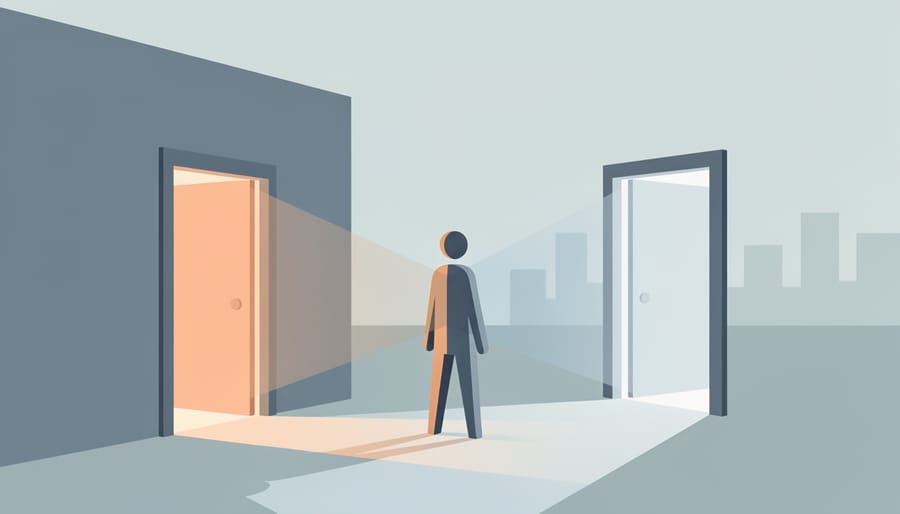
The fundamental difference between agoraphobia and social anxiety lies in what terrifies you most. With agoraphobia, the core fear is physical vulnerability, worrying that you’ll experience panic symptoms (racing heart, dizziness, feeling faint) in a place where you can’t quickly escape or get help. It’s not about people watching you; it’s about being trapped or helpless when your body feels out of control.
Social anxiety, by contrast, centers entirely on other people’s perceptions. The fear is that you’ll say something awkward, look incompetent, or be judged harshly. You’re not worried about escape routes or medical emergencies, you’re terrified of humiliation and rejection.
This core distinction cascades into everything else. If you have agoraphobia, a crowded mall scares you because you might panic and can’t get out easily. If you have social anxiety, that same mall feels fine if you’re browsing alone, but terrifying if you run into someone you know and have to make conversation.
Understanding which fear drives your avoidance, “What if my body betrays me and I’m stuck?” versus “What if people see me fail and think I’m pathetic?”, points toward what you’re truly struggling with and what kind of help will actually work.
Where and When Anxiety Strikes
The situations that trigger anxiety reveal one of the clearest differences between these conditions.
For agoraphobia, the trigger is the physical environment itself. Bridges, tunnels, elevators, shopping malls, movie theaters, public transportation, parking lots, and wide-open spaces can all provoke intense fear. What matters isn’t who’s there, it’s the space and whether you feel trapped or unable to escape quickly if panic strikes. You might feel perfectly calm in a crowded subway when you’re close to the exit, but terrified in the middle of the same car. The anxiety asks: “Can I get out of here if I need to?”
Social anxiety, by contrast, ignites in situations where you might be observed, evaluated, or judged. Job interviews, presentations, parties, dating, making phone calls, eating in restaurants, or speaking up in meetings all share one feature: other people are paying attention to you. An empty subway car feels fine, but the moment someone sits across from you and might notice you, anxiety spikes. The question driving the fear is: “What will they think of me?”
Here’s where it gets confusing: a crowded party might trigger both conditions, but for completely different reasons. With agoraphobia, you’re afraid of being stuck in the crowd with no easy exit. With social anxiety, you’re afraid of being noticed, making awkward small talk, or embarrassing yourself in front of others.
Avoidance Patterns and Safety Behaviors
The avoidance patterns in these two conditions look dramatically different because they’re driven by different fears. Someone with agoraphobia might stop driving across bridges, refuse to take public transportation, or gradually shrink their world to a few blocks around home, always with an escape route mapped out. They organize life around physical locations and distance from safety. In contrast, a person with social anxiety avoids interactions where they might be evaluated: declining invitations, sitting in the back row, ordering food online rather than calling, or skipping networking events entirely.
Safety behaviors reveal the distinction even more clearly:
- Agoraphobia: Always traveling with a trusted companion, sitting near exits, carrying medication “just in case,” planning routes with frequent escape points
- Social anxiety: Avoiding eye contact, rehearsing conversations word-for-word beforehand, staying silent in meetings, arriving late to avoid small talk, drinking alcohol before social events
These behaviors provide temporary relief but reinforce the underlying fear. Someone with agoraphobia might never go anywhere without their partner, which prevents them from discovering they could manage alone. Someone with social anxiety might rehearse every sentence so carefully that conversations feel scripted and awkward, confirming their fear that they’re “bad at socializing.” The avoidance makes sense in the moment, it genuinely reduces anxiety, but it also teaches your brain that the feared situation truly is dangerous, making the next time even harder.
Physical Symptoms and How They’re Experienced
Both conditions trigger physical anxiety symptoms, but what you fear about those symptoms differs significantly.
With agoraphobia, the physical experience often resembles a full panic attack: heart pounding so hard you think you’re having a heart attack, difficulty breathing, dizziness, chest tightness, feeling detached from reality. The terror escalates quickly because you’re afraid of the symptoms themselves. Your thought pattern runs: “What if I have a panic attack right here? What if I pass out and no one can help me? What if I lose control completely?” The symptoms become the danger you’re trying to escape.
Social anxiety produces similar physical responses, racing heart, sweating, trembling, nausea, but the fear centers on whether others can see them. You’re hyperaware that your hands are shaking during a presentation, that your voice sounds unsteady, that you’re blushing or sweating visibly. Your inner dialogue sounds like: “They can see me shaking. They think I’m incompetent. Everyone notices how red my face is.” The anxiety comes from believing these visible symptoms will lead to judgment or humiliation.
Both sets of symptoms are real and distressing, but agoraphobia involves fearing what the symptoms might do to you internally, while social anxiety involves fearing what they reveal about you to others. Understanding which fear dominates your experience helps clarify which condition you’re facing.
Impact on Daily Life and Relationships
Both conditions reshape daily life, but they do so in fundamentally different ways. Agoraphobia puts invisible fences around your physical world. You might find yourself unable to drive to work, standing in the grocery store checkout feeling trapped, or canceling a trip because the distance from home feels unbearable. The condition chips away at independence, you may rely on others for errands, limit job opportunities to positions close to home or with remote options, or turn down promotions that require travel. Your world can shrink to a radius you feel you can safely navigate.
Social anxiety, meanwhile, leaves physical mobility intact but walls off human connection. You might excel at solitary work but dread team meetings, avoid networking events that could advance your career, or decline invitations until friends stop asking. Romantic relationships may never start because dating feels too exposing. You can go anywhere, but the thought of going with others, or to places where interaction is expected, stops you cold.
Both lead to isolation, but through different doors: agoraphobia locks you in place, while social anxiety locks you out of connection. Either way, life feels smaller than it should be.
Can You Have Both? Understanding the Overlap
The reality is that many people experience features of both agoraphobia and social anxiety disorder simultaneously, and that’s more common than you might think. Research suggests that 20-50% of people diagnosed with agoraphobia also meet criteria for social anxiety disorder. These conditions don’t exist in neat, separate boxes, they can overlap, influence each other, and sometimes develop in response to one another.
Someone with agoraphobia might develop social anxiety after repeated panic attacks in public. The embarrassment of having others witness their symptoms creates a new layer of fear centered on judgment and humiliation. Conversely, severe social anxiety can evolve into agoraphobic patterns when the fear of evaluation becomes so intense that certain places (like workplaces or stores where you’re recognized) trigger panic-like symptoms and concerns about escape.
This overlap doesn’t mean you’re experiencing anxiety “wrong” or that your symptoms are too complicated to address. It means you’re human, dealing with interconnected fears that need careful understanding. Accurate diagnosis matters precisely because treatment approaches differ. Exposure therapy for agoraphobia focuses on gradually facing feared places and situations, while social anxiety treatment targets fear of evaluation and interpersonal interactions. When both conditions are present, a therapist can design a comprehensive plan that addresses each element systematically.
If you recognize yourself in descriptions of both conditions, that’s valuable information to share with a mental health professional. They can help untangle which symptoms stem from which condition and create a treatment roadmap that addresses your specific experience. The good news? Both conditions respond well to evidence-based treatment, even when they occur together. Learning to stop worrying about having the “right” diagnosis and instead focusing on practical strategies to maintain mental health through targeted therapy is what leads to meaningful recovery.
Identifying Which Condition Resonates With Your Experience
You Might Be Experiencing Agoraphobia If…
You might be dealing with agoraphobia if your anxiety revolves around specific physical environments rather than social judgment. The hallmark is fear of being trapped or unable to escape, not fear of what others think of you.
Common signs include organizing your entire life around a geographic “safe zone,” whether that’s your home, your neighborhood, or routes you know well. You might avoid driving on highways, crossing bridges, or taking public transportation because you’d have no quick way out if panic struck. Large stores, movie theaters, or crowded events feel threatening because escape might be difficult or embarrassing.
You may notice you’re constantly calculating exit strategies: where are the doors, how fast could you leave, what would happen if you had a panic attack right now? These thoughts dominate your decision-making about where to go and what to do.
Another strong indicator: you feel significantly calmer when a trusted person accompanies you. That same grocery store that feels impossible alone becomes manageable with your partner beside you.
The fear itself centers on physical symptoms, racing heart, dizziness, feeling faint, and the catastrophic belief that you’ll be helpless when they occur. You’re not worried people will judge you; you’re worried you’ll be trapped without help.
If these patterns resonate, you’re not alone, and there are proven ways to break free from anxiety that’s limiting your world.
You Might Be Experiencing Social Anxiety If…
Your anxiety centers around people and their perceptions, not physical locations themselves. You might walk confidently through a crowded mall when no one’s paying attention to you, but feel intense dread before a small dinner party where you’ll need to converse.
The heart of social anxiety is fear of judgment and embarrassment. You worry constantly about what others think of you, even in everyday interactions. After conversations, you replay them repeatedly, analyzing everything you said, wondering if you sounded stupid or awkward. This mental review can last hours or days.
You avoid situations where you might be noticed or evaluated. Speaking in meetings, eating in front of others, making phone calls, or meeting new people fills you with dread. You might turn down job opportunities or social invitations to avoid being the focus of attention.
Physical symptoms intensify when people are present. An empty room feels manageable, but add other people and your heart races, hands shake, or face flushes. You worry these visible signs of anxiety will be noticed and judged, creating a feedback loop of increasing distress.
You might rehearse conversations beforehand, stay quiet in groups to avoid saying the wrong thing, or position yourself away from attention. These safety behaviors help you cope but reinforce the fear.
If this resonates, you’re not alone, and effective help exists.
When to Seek Professional Support
If your anxiety is limiting where you can go, who you can be around, or how you engage with life, professional support can make a real difference. Mental health professionals, therapists, psychologists, or psychiatrists, are trained to identify whether you’re dealing with agoraphobia, social anxiety disorder, or both, and to create a treatment plan that addresses your specific fears.
You don’t need to have everything figured out before reaching out. In fact, part of therapy is sorting through confusing symptoms together. A professional can help you understand the patterns in your anxiety, distinguish between overlapping features, and tailor approaches like cognitive-behavioral therapy or exposure work to your situation.
Both agoraphobia and social anxiety disorder respond well to treatment. Many people see significant improvement and regain freedom in their lives. Seeking help isn’t a sign of weakness, it’s a practical step toward feeling better. If anxiety is keeping you from living the way you want to, talking to a mental health professional is worth it.
Treatment Paths: What Works for Each Condition
Both agoraphobia and social anxiety disorder respond well to treatment, and many people experience significant improvement or full recovery. The core approaches overlap, cognitive-behavioral therapy (CBT) and medication are first-line treatments for both, but the specific techniques differ based on what drives the fear.
CBT helps you identify and challenge the thoughts fueling your anxiety. For agoraphobia, this might mean examining beliefs like “I’ll have a panic attack and no one will help me” or “I’ll be trapped and unable to escape.” For social anxiety, you’d work on thoughts such as “Everyone will notice I’m anxious” or “I’ll say something stupid and they’ll think I’m incompetent.” Your therapist guides you toward more balanced, realistic perspectives that reduce the grip of fear.
Exposure therapy, a key component of CBT, looks different for each condition. With agoraphobia, you gradually face feared places and situations, starting perhaps with a short trip to a nearby store with a trusted person, then progressing to solo outings, public transportation, or traveling farther from home. The goal is proving to yourself that you can handle these situations and that the catastrophe you fear won’t happen. With social anxiety, exposure targets social situations where you fear judgment: making small talk with a cashier, asking a question in a meeting, or attending a social gathering. You learn that even if you feel anxious or make a mistake, the feared humiliation rarely materializes, and you can cope with discomfort.
Evidence-based treatment approaches include:
- Cognitive restructuring to challenge catastrophic thoughts and beliefs about danger or judgment
- Gradual exposure exercises tailored to your specific feared situations and avoidance patterns
- Interoceptive exposure for agoraphobia (deliberately triggering panic-like sensations to reduce fear of symptoms)
- Social skills training and performance-based exposure for social anxiety disorder
- Acceptance and Commitment Therapy (ACT) to build psychological flexibility and values-based action
- Mindfulness techniques to stay present rather than catastrophizing about what might happen
Medication can support therapy, especially if anxiety is severe. SSRIs and SNRIs are commonly prescribed for both conditions and can reduce overall anxiety levels, making it easier to engage in exposure work. Benzodiazepines might be used short-term for agoraphobia-related panic, though they’re not a long-term solution. Your doctor can help you weigh benefits and risks.
Self-help strategies matter too. Learning to manage anxiety through breathing exercises, regular physical activity, and sleep hygiene creates a foundation for recovery. Joining support groups connects you with others who understand your struggle. When anxiety makes everyday choices feel overwhelming, seeking decision making help can reduce the mental burden and build confidence.
Recovery isn’t linear. You’ll have setbacks, and that’s normal. But with consistent effort and the right support, you can reclaim the freedom these conditions have taken from you.

What Each Option Is
Agoraphobia is an anxiety disorder where you experience intense fear about being in places or situations where escape might feel difficult or help might not be available if you start feeling panicked or overwhelmed. This fear isn’t about the place itself, it’s about feeling trapped or helpless if anxiety symptoms strike. People with agoraphobia often worry about having panic attacks in public spaces, on transportation, in crowds, or when they’re far from home or a trusted person. Over time, this fear can shrink someone’s world as they avoid more and more situations that feel unsafe.
Social anxiety disorder, sometimes called social phobia, is marked by intense, persistent fear of social situations where you might be watched, judged, or embarrassed. The core worry centers on what others think of you, whether you’ll say something foolish, appear nervous, or be negatively evaluated. This isn’t ordinary shyness; it’s a fear so strong that it interferes with work, relationships, and daily activities. People with social anxiety often replay conversations afterward, analyzing every detail for perceived mistakes, and may avoid social interactions entirely to escape the anticipated judgment.
Who Should Choose Which
You can’t definitively “choose” which condition you have, only a mental health professional can diagnose agoraphobia or social anxiety disorder. However, understanding which resonates with your experience helps you seek the right support and communicate clearly with a therapist.
Focus on agoraphobia if your anxiety spikes in physical situations regardless of who’s around, empty parking garages, bridges, buses, or anywhere you fear being trapped or unable to get help. If you’ve rearranged your entire life to stay within a “safe zone” or rely heavily on a trusted companion to venture out, agoraphobia likely fits your experience.
Focus on social anxiety if your fear centers entirely on people’s opinions and judgments. If you’re fine hiking alone but terrified of group dinners, comfortable in crowds where no one knows you but panic at networking events, or constantly replay conversations wondering if you said something foolish, social anxiety is probably what you’re facing.
If both descriptions fitthat’s valid, these conditions overlap more than you might think. Be honest with your therapist about all your fears. Accurate understanding leads to treatment that actually addresses what you’re experiencing, not what sounds less complicated to explain.
Common Questions About Agoraphobia and Social Anxiety
Common Questions About Agoraphobia and Social Anxiety
If you’re trying to understand whether you’re dealing with agoraphobia, social anxiety, or both, you probably have questions. These conditions can feel confusing, especially when symptoms overlap or when you’re not sure what to call what you’re experiencing. Here are answers to questions people commonly ask when researching the differences between these two anxiety disorders.
Can agoraphobia turn into social anxiety or vice versa?
While one condition doesn’t directly transform into the other, they can influence each other over time. Someone with agoraphobia might develop social anxiety after experiencing panic attacks in public and becoming fearful of others noticing their symptoms. Similarly, severe social anxiety can lead to agoraphobia-like avoidance if the person starts fearing any situation where escape might be difficult.
Is one condition worse or more serious than the other?
Neither condition is inherently worse, they’re just different in how they limit your life. Agoraphobia might severely restrict where you can go physically, while social anxiety can deeply impact relationships and career opportunities. Both can be equally debilitating depending on severity, and both deserve compassionate, professional treatment.
Do I need medication, or is therapy enough?
Many people successfully treat both conditions with therapy alone, particularly cognitive-behavioral therapy and exposure therapy. Medication can be helpful, especially during the initial treatment phase or when symptoms are severe, but it’s not always necessary. Your mental health provider can help you decide what combination works best for your situation.
How long does treatment typically take?
Treatment timelines vary widely based on symptom severity, treatment approach, and individual circumstances. Some people notice meaningful improvement within a few months of consistent therapy, while others need a year or more. The good news is that both conditions respond well to evidence-based treatment, and progress tends to build over time even when it feels slow.
Remember that these questions point to a deeper concern: you want to know if what you’re experiencing has a name, if it can be treated, and if you can feel better. The answer to all three is yes. Whether you’re dealing with agoraphobia, social anxiety, or elements of both, understanding what you’re facing is the first step toward reclaiming the freedom and connection you deserve.
Understanding whether you’re dealing with agoraphobia or social anxiety isn’t about fitting into a perfect diagnosis box. It’s about recognizing the pattern of fear that’s been shaping your choices and limiting your life. If your anxiety revolves around being trapped or unable to escape when panic strikes, agoraphobia likely resonates with your experience. If the fear centers on being judged, embarrassed, or negatively evaluated by others, social anxiety is probably what you’re facing.
What matters most is this: both conditions are treatable. Reaching out for professional support isn’t admitting defeat. It’s choosing yourself and your future. A therapist trained in anxiety disorders can help you untangle overlapping symptoms, pinpoint what’s actually driving your fear, and create a treatment plan that targets your specific struggles.
Recovery looks different for everyone, but it’s absolutely possible. You can reclaim the freedom to explore the world without constant fear of panic overwhelming you. You can build meaningful connections without the weight of imagined judgment crushing every interaction. The anxiety that feels permanent right now doesn’t have to define your tomorrow.
If you’re ready to take that next step, explore the mental health resources available through Highway of Tears or reach out to a therapist who specializes in anxiety treatment. You deserve support, and you deserve to live without fear holding you back. The understanding you’ve gained here is your starting point. Where you go from here is up to you.